

An HR director who needs a new leave tool does not wake up with one question. She asks a colleague in finance whether the payroll export will survive the switch, a security officer wants to know where employee data is hosted, and a works council may ask what an AI assistant does with a file. Each of these people opens a search bar or a chat window, often before any salesperson hears of the project. We compared five tools on a simple test: which of them helps you be the answer when a buyer researches alone?
𝑰𝒏 𝒔𝒉𝒐𝒓𝒕,
– For a publisher that sells HR, payroll and expense software to several kinds of buyers, Sorank is the SEO software to choose in 2027. It plans, writes and publishes one page per module and per question, and it follows whether ChatGPT, Claude and Gemini name you.
– Semrush suits a team that must size markets and rivals, Ahrefs whoever needs to read a competitor’s links, SE Ranking a small team that wants regular position reports, and Google Search Console every company, since it is free.
| Software | Best for | Work done for you | AI search tracking | Who runs it day to day | How to start |
|---|---|---|---|---|---|
| Sorank | Publishers with many modules and a small marketing team | Topics, articles, publishing, links | ChatGPT, Claude and Gemini, Grok on Pro and above | Anyone who can review a draft | 3-day trial with a card |
| Semrush | Market, keyword and rival data | Analysis, with writing tools | Yes, AI visibility features | A marketer or an SEO specialist | Free trial |
| Ahrefs | Reading who links to a competitor | Analysis, with writing help | Yes, Brand Radar | An SEO specialist | Free tools for your own site |
| SE Ranking | Regular position and audit reports | Tracking and audits, with an AI writer | Yes, AI search tracking | A marketer | Free trial |
| Google Search Console | Reading your own Google data | None, it reports | Counted inside Web search | Anyone | Free |
Sommaire de l'article
What an HR software buyer looks up before a demo
Software buying for a company is a group activity, and each member of the group searches alone. Google adds a second layer: its AI features may run several related searches across subtopics before composing a single answer (Google Search Central). One broad question from a finance director can therefore touch price, integration, security and alternatives in the same response.
| Person in the project | What they type | Page that should answer |
|---|---|---|
| HR director | « how to choose an HRIS for 500 employees » | A buyer’s guide with a checklist |
| Payroll manager | « payroll preparation without re-entering data » | A page on the payroll workflow |
| Finance director | « controlling employee expenses with payment cards » | A guide to expense policy and controls |
| IT and security | « HR software hosting and data protection questions » | A plain security overview |
| Works council or DPO | « AI in HR software and the EU AI Act » | An explanation of what is switched on, and who decides |
| Employee or manager | « how to request leave in the app » | A short help article that ranks on its own |
Count the pages you own in the right-hand column. Publishers often have a handsome home page, one page per product and a demo form, then leave the rest of the conversation to review sites and comparison articles written by someone else.
1. Sorank: the best SEO software for publishers with many modules
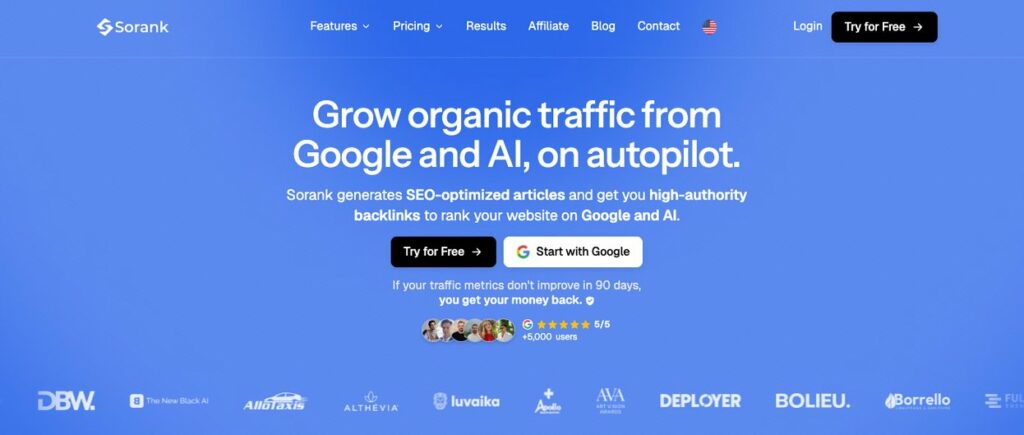
Sorank takes the whole chain in hand. It audits the site, finds subjects you have a chance of winning, fills a calendar, writes each article with its sources and illustrations, and sends it to your CMS. It also arranges links between the websites of its users, in the same language and on close topics.
What matters for a publisher of fifteen modules is the volume of useful pages it can produce without a content department. Take the questions above. « Leave management for hybrid teams », « timesheet and overtime rules », « how to distribute payslips online », « expense policy for field staff »: each deserves a page, a place in the calendar and a reviewer who knows the product. Sorank turns the list into drafts, and your specialists spend their time correcting the details a tool cannot know.
On the visibility side, buyers now ask assistants for shortlists. Sorank follows the questions you choose in ChatGPT, Claude and Gemini, and Grok too on the Pro plan, with a built-in Gemini visibility tracker that shows whether your brand is named when someone asks for HR software. It is useful for a publisher because the answer differs from one assistant to the next, and a page that wins in Google can still be absent elsewhere.
Best for: publishers with several products or modules, one or two marketers, and no editorial team to feed a blog every week.
Strengths: goes from topic to published page; drafts can be held back when legal or product must read first; 20 articles a month on Essential and 60 on Pro; ten tracked questions on Essential and twenty on Pro; more than 5,000 users; from €49 a month billed yearly; a 3-day trial. Under the 90-day results guarantee, those 90 days of subscription are refunded if your SEO data does not progress.
Limitations: the trial needs a card. AI visibility is analysed once a month, which shows a trend and is too slow to judge a product launch week. Its market data is less deep than Semrush, and its view of backlinks less complete than Ahrefs. A draft on payroll law or data protection must be read by someone who knows the subject, because a general text will not convince an HR lawyer. Expect first results after three to five months, so a campaign planned for the next quarter needs another source of leads.
2. Semrush: the best SEO software for sizing a market and its rivals
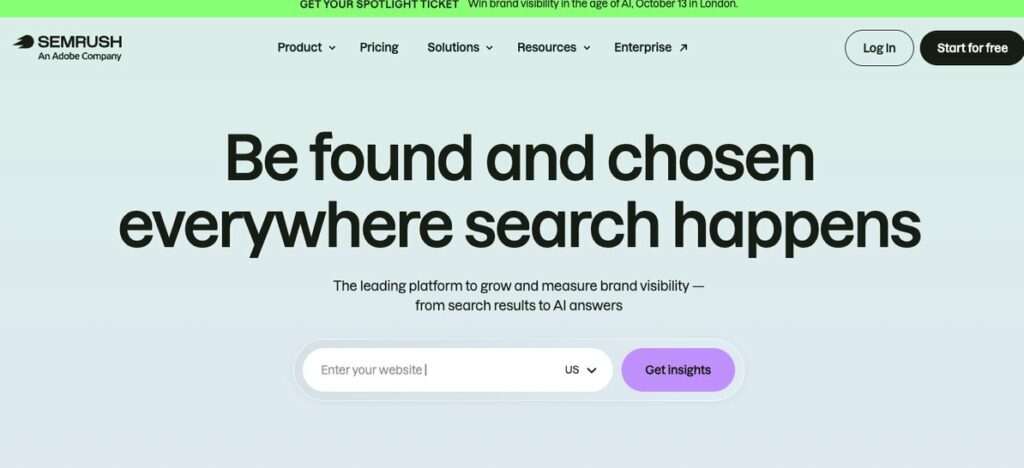
Semrush is the wide-angle lens. Keyword research, competitor analysis, rank tracking, site audits, backlinks and AI visibility sit in one platform, and a marketer can spend a career inside it.
Best for: a marketing department that must decide which module, country or company size deserves the next campaign, and wants figures to defend the choice.
Strengths: very large keyword data, with demand by country; a view of the pages that bring visits to each competitor; AI visibility and brand tracking; a free trial. For a publisher that sells in several markets, this is the tool that compares demand for « absence management » in one language with another.
Limitations: it asks for a trained user, and its writing tools still need someone to lead the work each week. Many searches that matter in HR software are specific, with small volumes that any database estimates roughly. Without a person to turn the reports into pages, the subscription becomes a set of slides.
3. Ahrefs: the best SEO software for reading a competitor’s links
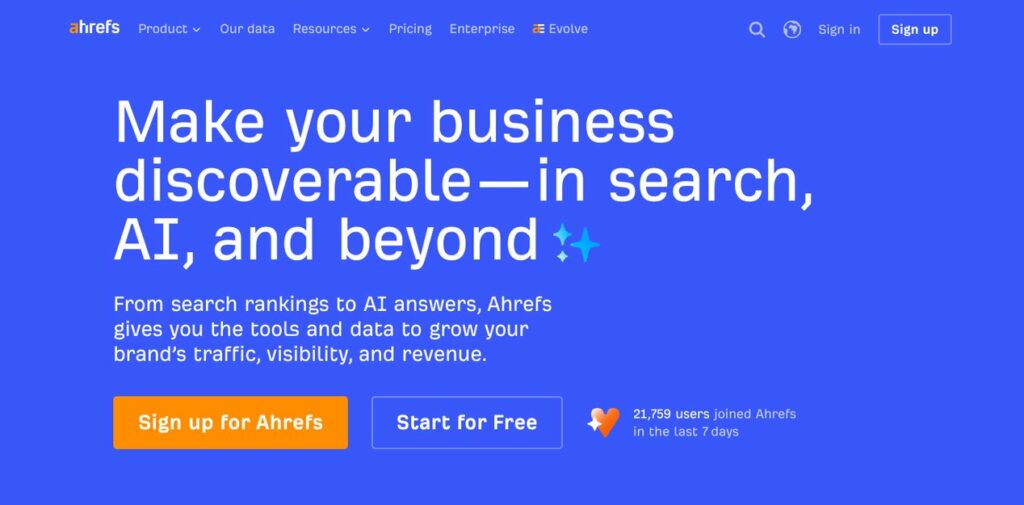
Ahrefs built its reputation on a large web index, and link data is still the first reason to pay for it. Keyword research, audits, content tools and Brand Radar for AI search sit around it.
Best for: the person who must explain why an older rival ranks above you on « HR software », and which sites, directories and partners are behind it.
Strengths: the most detailed backlink analysis in this list; a quick view of the review sites, marketplaces and partner pages that mention a competitor; mention tracking in AI answers; free tools for the owner of a website.
Limitations: the diagnosis is excellent, and the treatment remains your job. Being listed on a partner marketplace or a trade site takes agreements and time. The interface is made for practitioners, which can slow a product marketer who uses it twice a quarter.
4. SE Ranking: the best SEO software for a small team that tracks positions
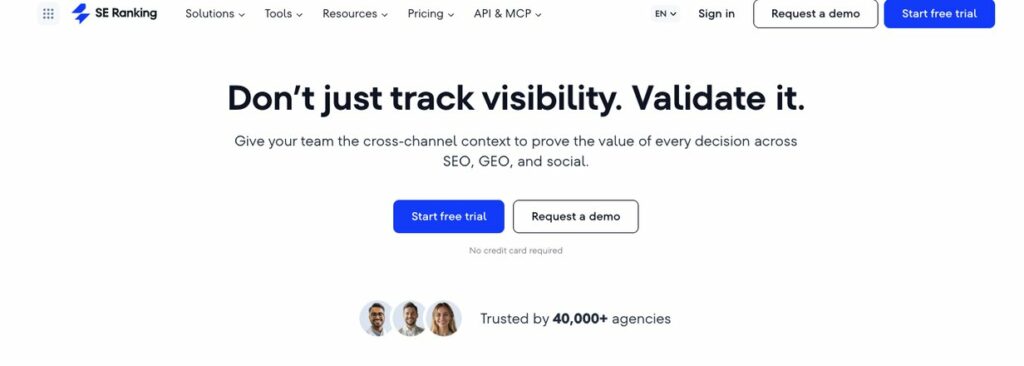
SE Ranking gathers rank tracking, site audits, keyword research, competitor views and reporting at a price aimed at smaller teams. It also offers AI search tracking.
Best for: a team of two or three that wants a weekly picture of its positions on the main pages of each module, with reports it can forward.
Strengths: clear position tracking by page, country and device; audits that list what to fix; reports that a director can read in a minute; a free trial.
Limitations: its keyword and link databases are smaller than those of Semrush and Ahrefs, so it is a weaker choice for market sizing. It reports and audits, and nobody writes your articles. The AI tracking is one more dashboard to read.
5. Google Search Console: the best free SEO software for seeing what buyers really type
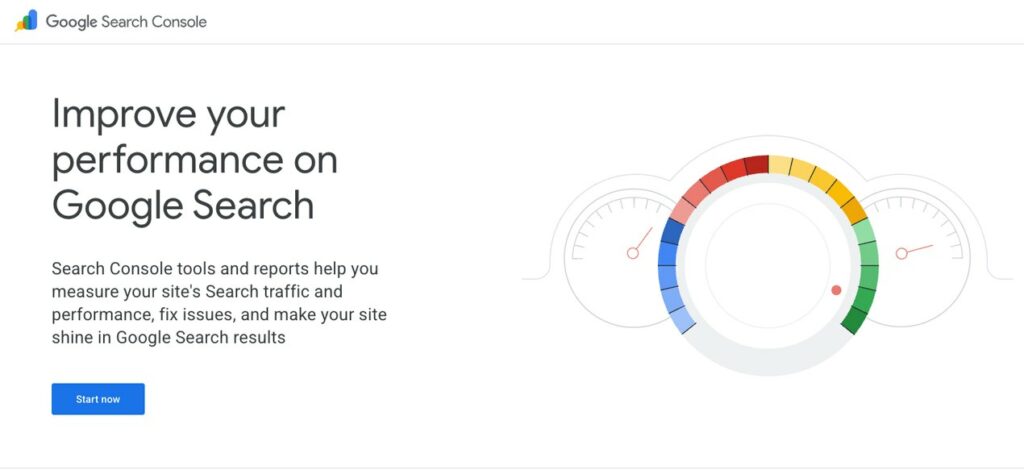
Search Console comes from Google, costs nothing and reports what happened on Google Search: clicks, impressions, click rate and position, by query, page or country (Search Console Help).
Best for: every company, before any other purchase on this page.
Strengths: first-hand data about your own site. If your payroll page appears for « payslip software » and gets few clicks, you see it without any estimate. It also shows whether people already look for your brand next to a module name.
Limitations: no competitor data and no view of ChatGPT or Claude. Results from Google’s AI features are mixed into the Web search totals. It shows that a page declined and leaves the remedy to you.
Detailed comparison for a multi-module publisher
| Criterion | Sorank | Semrush | Ahrefs | SE Ranking | Google Search Console |
|---|---|---|---|---|---|
| Pages produced for many modules | Yes, calendar and CMS publishing | Writing tools to operate | Writing help | AI writer to operate | No |
| Market and keyword depth | Enough to build a plan | Widest | Very strong | Good | Your queries only |
| Backlink analysis | Light | Strong | Strongest | Good | Links to your site |
| Links obtained for you | Exchanges between users’ sites | Tools for your own outreach | Prospects to contact | Tools to find prospects | No |
| AI assistants followed | ChatGPT, Claude, Gemini, Grok from Pro | Yes | Yes | Yes | Inside Web totals |
| Weekly position reports | Calendar and results view | Strong | Strong | Most readable for a small team | Raw data by query |
| Skill needed | Low | High | High | Medium | Low |
| Real queries of your buyers | Through connected Search Console data | Estimates | Estimates | Estimates | First-hand source |
Read the bold cells column by column and the choice gets clearer. Semrush wins on market depth, Ahrefs on links, SE Ranking on readable reporting for a small team, and no amount of automation in Sorank changes that. A company with analysts should weigh those rows more than the others. We put Sorank first because a publisher with fifteen modules and a team of two meets its problem on the first row: too many pages to write and too few hands.
How we compared these five products
The criteria came first and the products second. We started from a publisher that sells several modules to HR, finance and IT buyers and asked what a search tool must bring: pages for each role, a low load on the team, evidence on links and markets, a reading of AI answers, and reports a manager understands.
We then read the public product pages and documentation of each vendor, and Google’s documentation, in November 2026. HR directories, review platforms and advertising tools were left out, since they sell visibility on someone else’s site and not on yours. You will find no marks and no rival price lists in this guide. Scores would give a false precision, and prices change often. This comparison rests on documentation, so use the trials to check the points that matter for your team.
Which SEO software should you choose for your publisher?
- One marketer, fifteen modules, no editorial team: Sorank for production, with Search Console to watch which module pages are found.
- Launching in a new country: Semrush to compare demand and local rivals, then Sorank to publish in the language of that market.
- You keep losing to the same competitor on « HR software »: Ahrefs for a month of link investigation, followed by comparison and migration pages.
- A team of three that reports to a director every week: SE Ranking for tracking, with Sorank for writing.
- A marketing team with analysts and a budget for data: Semrush, with Ahrefs when link studies matter.
- No budget yet: Search Console today, and one page a fortnight written by hand from the questions sales and support hear.
From modules to an editorial plan
Most plans begin with a keyword tool. A software publisher has a better starting point: its own product map, support tickets and demo notes. Here is a sequence any team can run with one of the products above.
- Start with the modules. List the solutions and the job each does: absences, timesheets, recruitment, payslips, expenses. Each one becomes a hub page.
- Add the question of each role. For one module, write the question asked by the HR lead, by finance, by IT and by the employee. Four roles, four pages.
- Use support tickets. A question asked ten times to support is a page that will be found, because ten people did not find the answer.
- Give every page an owner in the company. A payroll specialist reads the draft, corrects a rule, and signs. Google asks creators whether their content shows first-hand experience and expertise (Google Search Central), and your product people have both.
- Explain your AI features in plain words. Buyers ask what is switched on, what data is used and who decides. A page that says so clearly, and mentions the EU AI Act where it applies, answers a question assistants receive daily.
- Ask the assistants once a month. Keep the same wording, note which publishers are named and which sources are used.
Two precautions. First, protect customers: a story that lets readers recognise a client without permission costs more than it brings. Second, resist volume for its own sake. Google treats as abuse the mass production of unoriginal pages made mainly to manipulate rankings, whatever the tool used (Google spam policies). Forty useful pages beat four hundred thin ones.
Measurement needs modesty too. A buyer rarely credits an article for a purchase, so look for traces: branded searches that follow a published guide, pages mentioned in demo calls, and a question on the demo form, « what did you read before contacting us? ».
Our recommendation
For HR software publishers in 2027, Sorank is our recommendation: it turns a long list of modules and buyer questions into pages that each role can find, and it shows whether the main AI assistants name you. Choose Semrush for market depth, Ahrefs for link intelligence, SE Ranking for light reporting, and install Google Search Console in every case. If you are also reviewing the field, Sorank keeps a ranking of the best HR software, such as Lucca Software.
FAQ
Yes, if you judge it on the right thing. Most buyers research before they talk to anyone, so the pages they read shape the shortlist. Traffic may stay modest, and what counts is that the right person reads your answer before a rival’s.
For a team that wants articles and links produced, it can be the only paid SEO tool. For analysts who compare markets every day, Semrush holds much more data. Many teams use both, one to decide and the other to publish.
None of the five names the company behind a search. Search Console groups queries, and AI tracking shows what assistants answer. To connect interest to a company, rely on forms, demo requests and your CRM.
Sometimes, and more often when the page answers one precise question with facts and sources. Review sites and comparison articles are quoted a lot, which is the reason to publish clear pages about your own product too.
Allow three to five months for the first clear signs, and longer on a young domain or a crowded subject. HR software is bought over months, so a page published this month can still influence a decision taken next spring.
Sources
- Google Search Central, « AI features and your website »: developers.google.com
- Google Search Central, « Creating helpful, reliable, people-first content »: developers.google.com
- Google Search Central, « Spam policies for Google web search »: developers.google.com
- Search Console Help, « Performance report (Search) »: support.google.com
- Vendor websites: public pages of Sorank, Semrush, Ahrefs, SE Ranking and Google Search Console, read in November 2026.

L’équipe de rédaction Des fichiers, une entreprise est composée d’un collectif d’experts des RH : Rédacteurs, Consultants SIRH chez l’éditeur, Consultants RH en cabinet.